How many questions are on the Ontario G1 road signs test?
The official MTO G1 test contains 20 road signs questions. You must get at least 16 correct (80%) to pass this portion before receiving your G1 permit.
Sanjay Dahiya — lessons in English, Hindi, Punjabi & Urdu
25 independent road sign practice questions — real sign images, instant feedback, and a clear explanation for every answer. Use this independent practice resource alongside the official Ontario handbook. A practice score does not guarantee a knowledge-test pass.
Road Test Pro offers $40 / 45-minute private driving lessons and a $200 Brampton road-test package with a dual-control car, 45-minute warm-up and agreed Brampton pickup; official DriveTest fee extra. Confirm your test date, centre and pickup address before booking. Call 647-202-7681 or WhatsApp Us.
Road Test Pro · Brampton, ON · roadtestpro.com · No street address — pickup for lessons & tests.
The official MTO G1 test contains 20 road signs questions. You must get at least 16 correct (80%) to pass this portion before receiving your G1 permit.
If you retake the knowledge test within one year, you only need to repeat sections you did not pass. A retest fee applies; same-day availability is not guaranteed. Check DriveTest knowledge-test guidance.
Our practice test offers full translations in English, Punjabi (ਪੰਜਾਬੀ), Hindi (हिन्दी), Urdu (اردو), Persian (فارسی), and Gujarati (ગુજરાતી).
English reference version of the 25 practice questions. The interactive quiz above supports six languages. Independent study material, not official test questions. Check the official Ontario driver’s handbook; a practice score does not guarantee a pass.
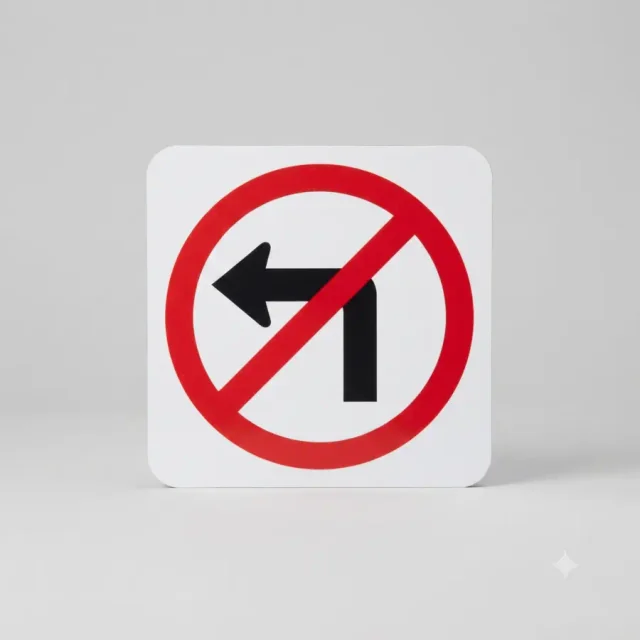
Correct answer: You must not make a left turn.
Explanation: A red circle with a slash through a left-turn arrow means left turns are prohibited at this location.
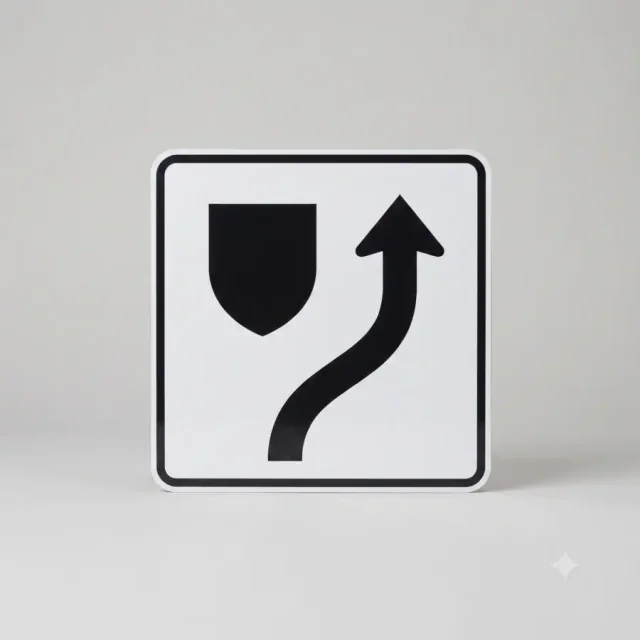
Correct answer: Pass to the right of the obstruction or island.
Explanation: This marker is mounted on medians or islands — the arrow shows you must keep right and pass on that side.
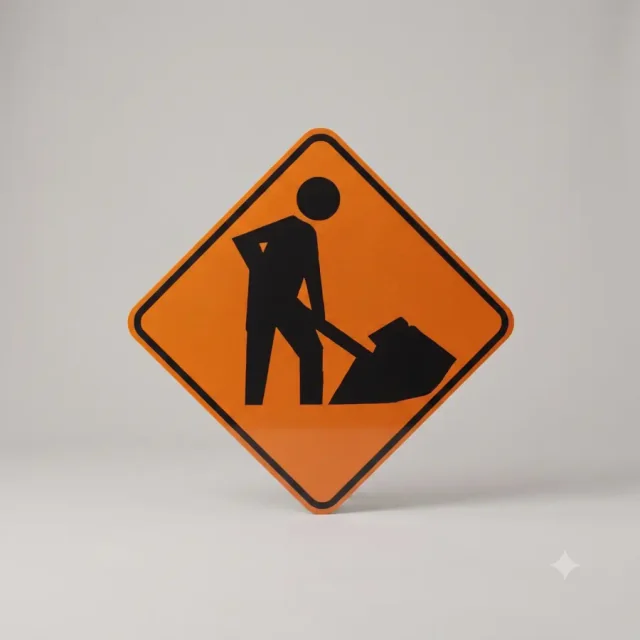
Correct answer: Road construction or maintenance work ahead.
Explanation: The orange diamond with a worker shoveling warns that construction or maintenance crews are working on or near the road.
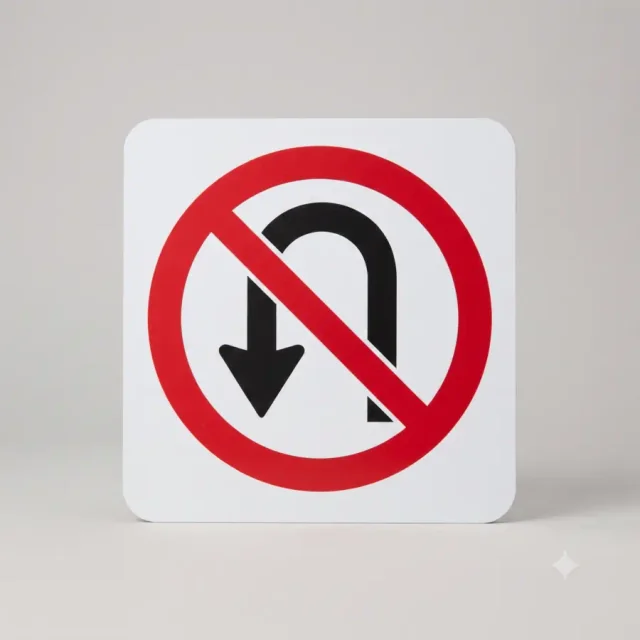
Correct answer: U-turns are not permitted here.
Explanation: A U-turn arrow with a red circle and slash means U-turns are prohibited at this location.
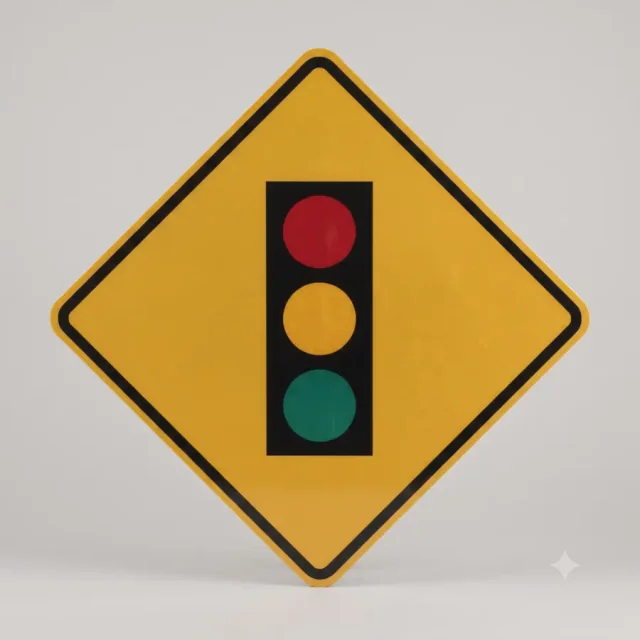
Correct answer: Traffic signals ahead.
Explanation: This diamond warning sign with a traffic light pictograph tells you signal lights are coming up — be ready to stop.
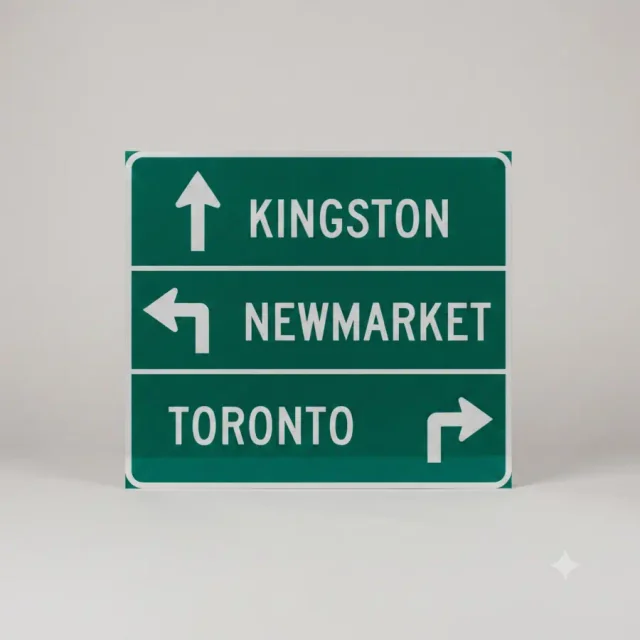
Correct answer: A guide sign showing directions to nearby destinations.
Explanation: Green guide signs show the direction and distance to cities, towns, and highways along your route.
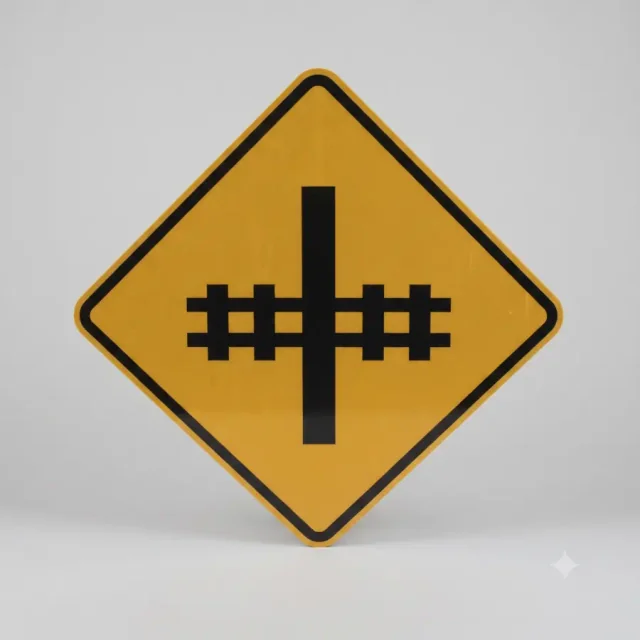
Correct answer: A railway crossing is ahead.
Explanation: This yellow diamond with a crossbuck-and-track symbol warns that a railway crossing is coming up.
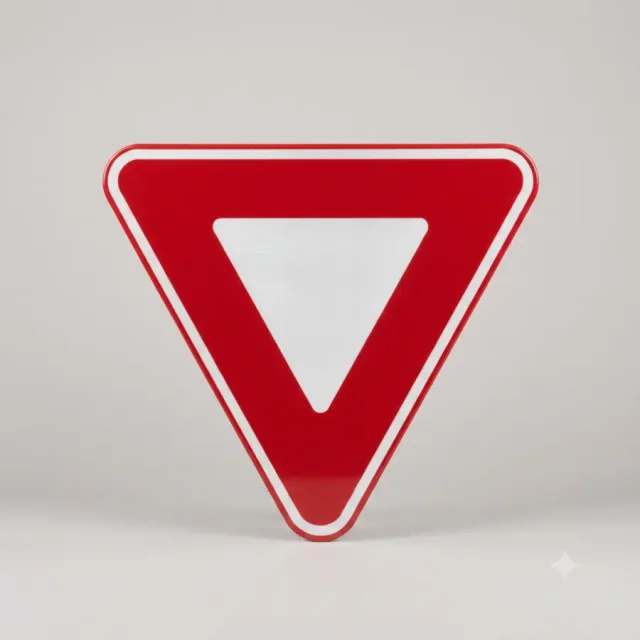
Correct answer: You must yield the right-of-way.
Explanation: An inverted red-and-white triangle is a Yield sign — slow down and give the right-of-way to traffic and pedestrians.

Correct answer: Come to a complete stop.
Explanation: The red octagon is Canada's Stop sign — come to a full stop, then proceed only when it's safe.

Correct answer: No stopping is permitted in this zone.
Explanation: A red circle-and-slash over a solid dot, with arrows showing the zone, means stopping is prohibited here — even briefly.
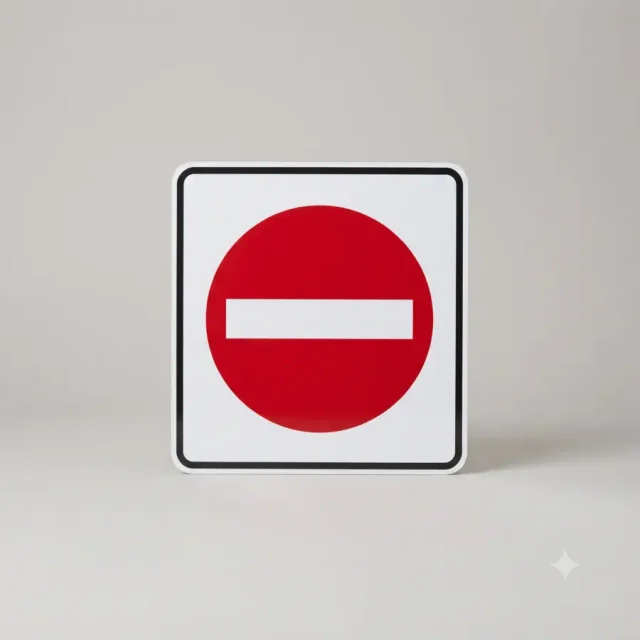
Correct answer: Do not enter this roadway.
Explanation: A red circle with a white bar means the roadway ahead is closed to traffic coming from your direction — do not enter.
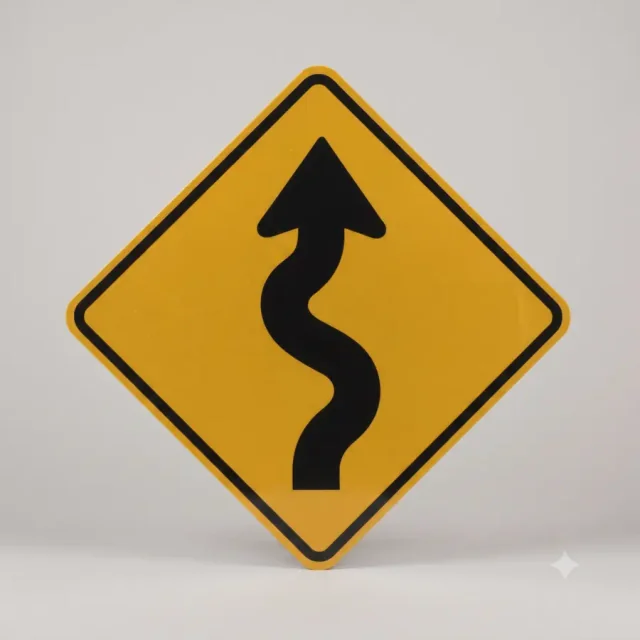
Correct answer: A winding road is ahead.
Explanation: This diamond sign with an S-curve arrow warns of a series of curves ahead — slow down before you enter them.
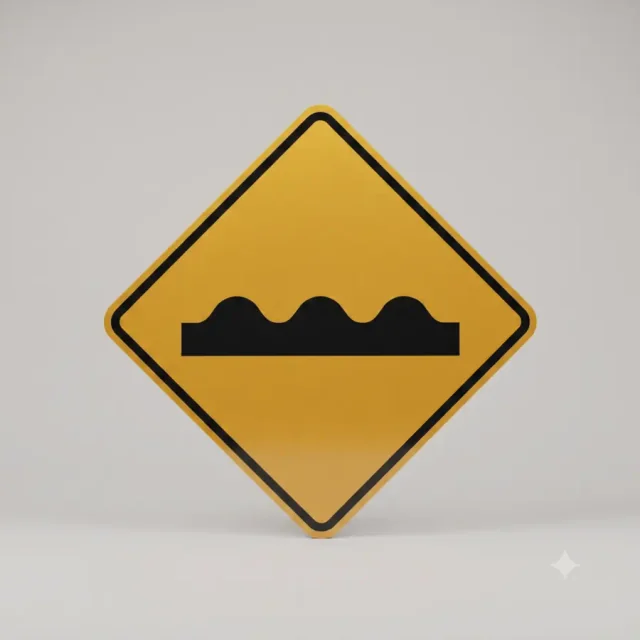
Correct answer: The road ahead has a bump or uneven pavement.
Explanation: This diamond sign with a wavy black bar warns of a bump or uneven pavement surface ahead.
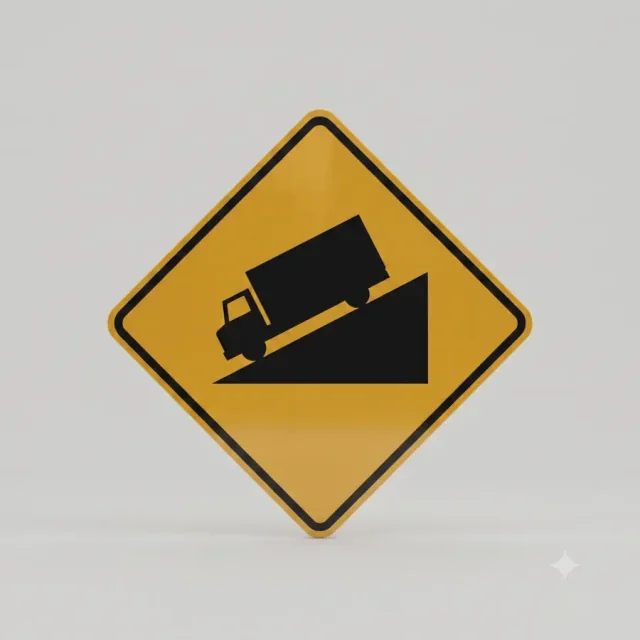
Correct answer: A steep hill is ahead.
Explanation: A truck angled downhill warns of a steep grade ahead — check your brakes and gear down before descending.
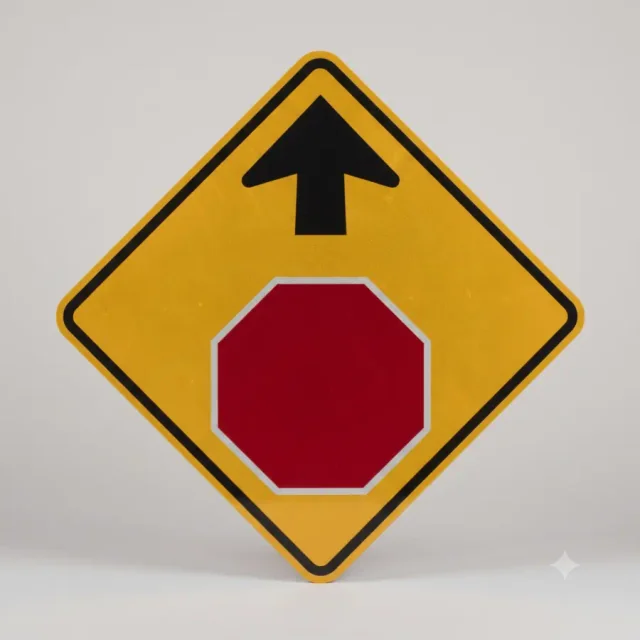
Correct answer: You are approaching a stop sign.
Explanation: An arrow above a solid octagon warns that a stop sign is coming up — start slowing down now.
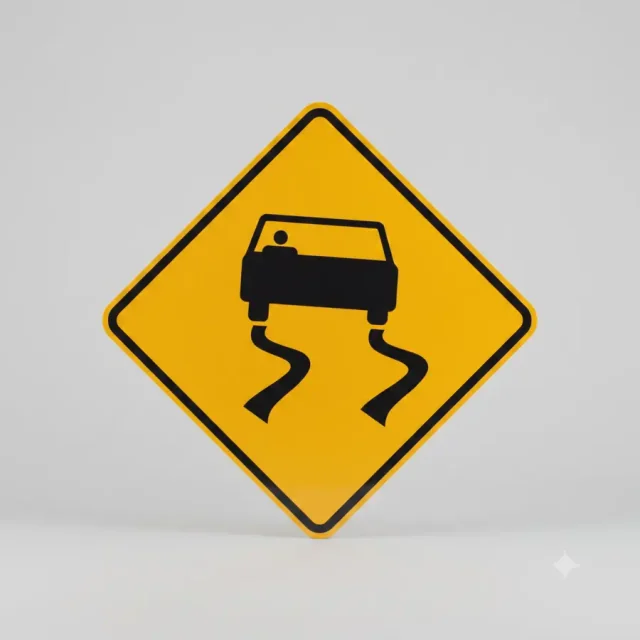
Correct answer: The road ahead is slippery when wet.
Explanation: A car fishtailing on this diamond sign warns the road surface can be slippery in wet weather — ease off the gas and avoid hard braking.
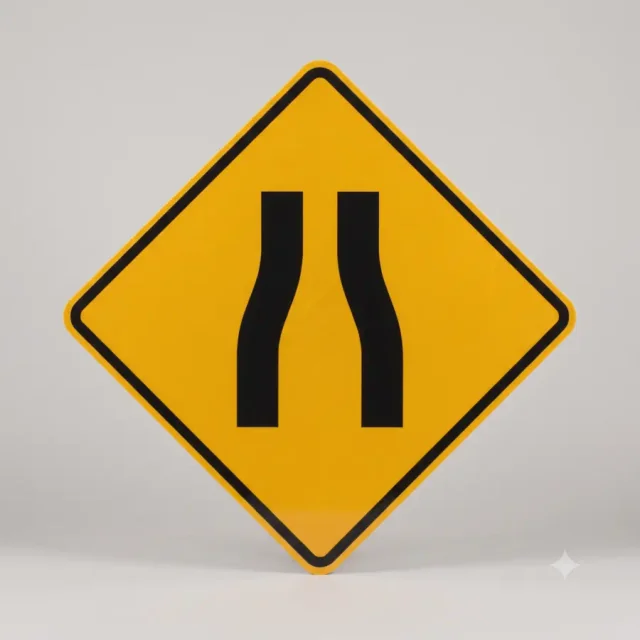
Correct answer: The pavement narrows ahead.
Explanation: This sign shows the road surface narrowing — be ready to merge or share a tighter lane.
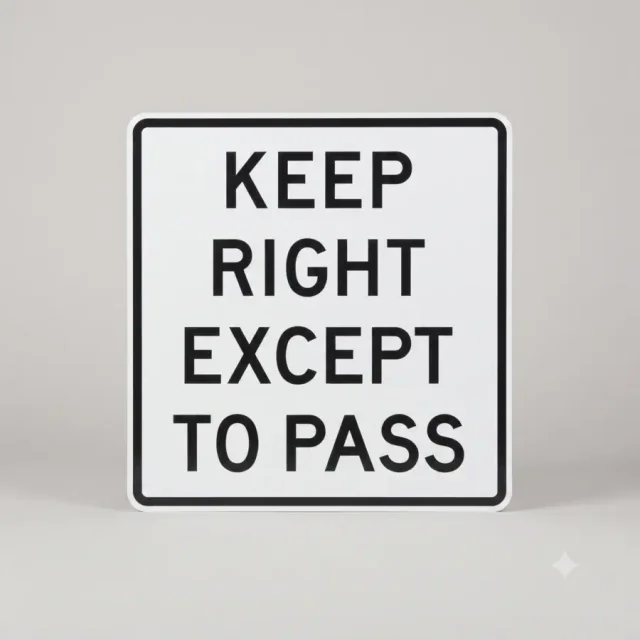
Correct answer: Keep to the right lane except when passing.
Explanation: This regulatory sign means you must drive in the right-hand lane unless you're passing another vehicle.
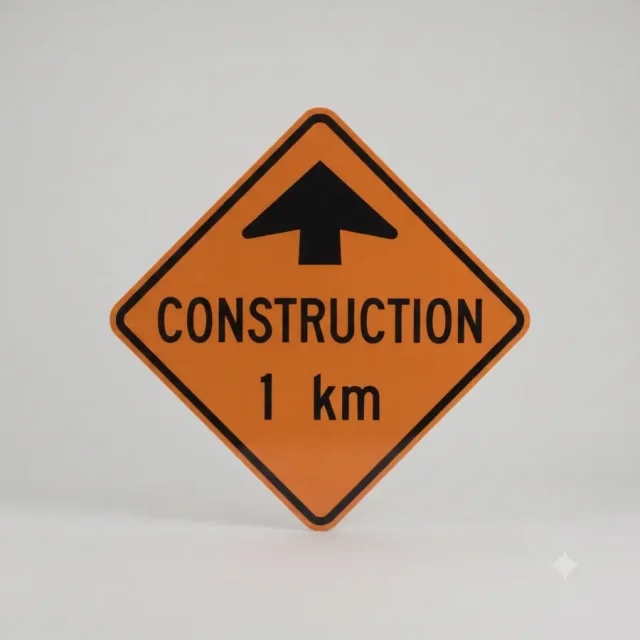
Correct answer: A construction zone begins 1 km ahead.
Explanation: This orange sign tells you exactly how far ahead the construction zone begins, so you can prepare early.

Correct answer: A sharp turn is ahead — slow down now.
Explanation: This checkerboard chevron panel marks a sharp curve — the arrow shows which way the road turns.
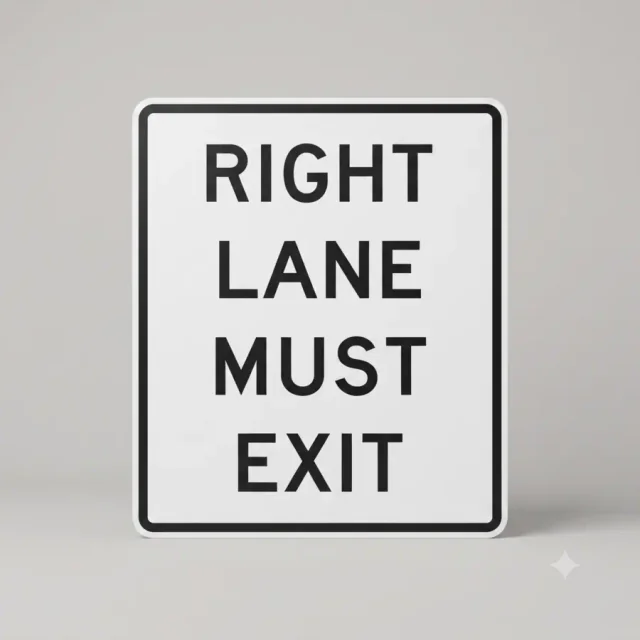
Correct answer: Traffic in the right lane must exit here.
Explanation: If you're in the marked lane when you see this sign, you're required to take the exit — it doesn't continue on the highway.
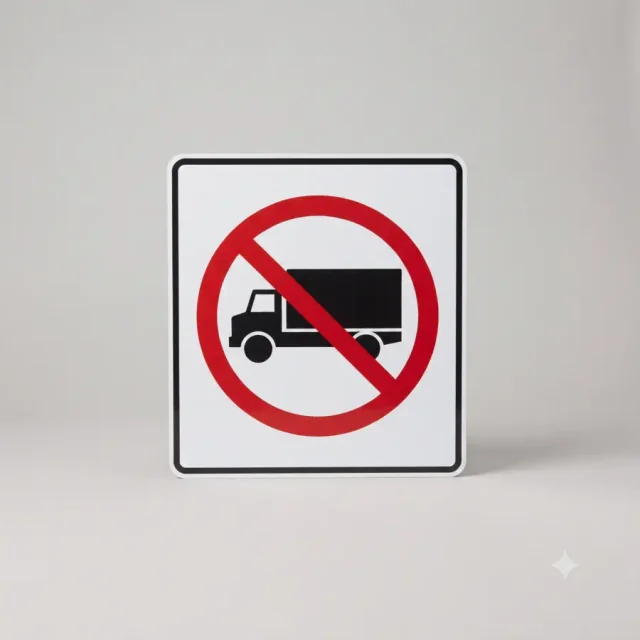
Correct answer: Trucks are not permitted on this road.
Explanation: A truck silhouette inside a red circle-and-slash means trucks are prohibited from using this road.
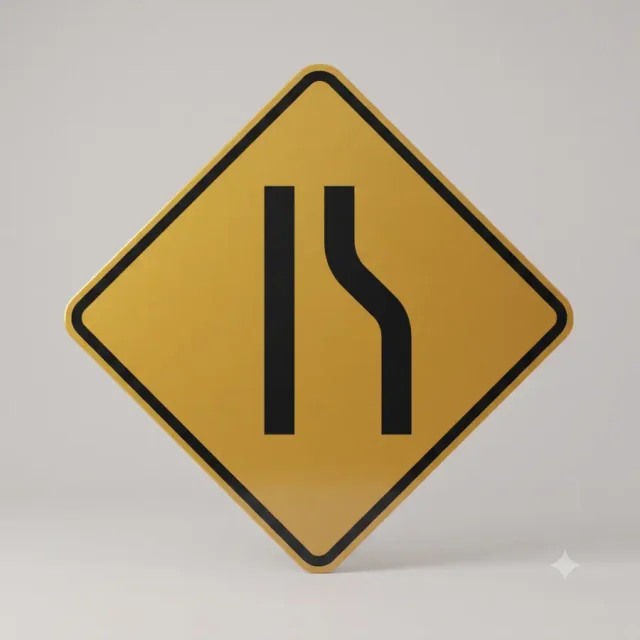
Correct answer: The right lane ends — merge left.
Explanation: One lane continuing straight while the other curves away shows the right lane is ending — merge left in good time.
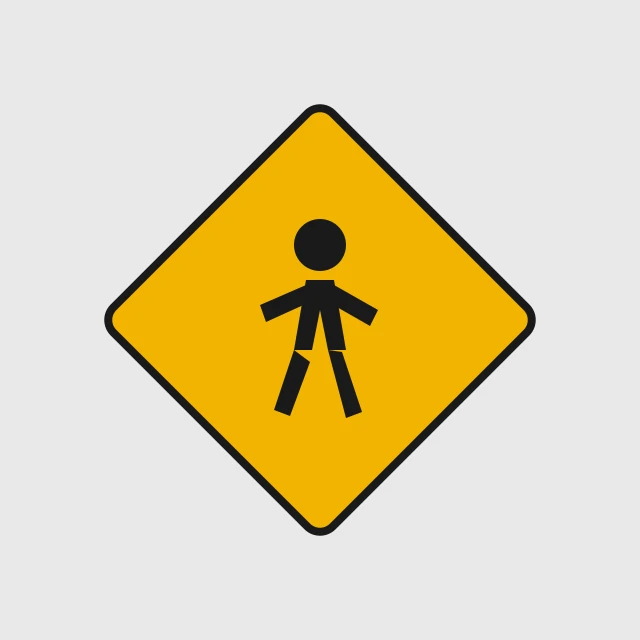
Correct answer: A pedestrian crossing is ahead.
Explanation: This diamond sign with a walking figure warns that pedestrians may be crossing the road ahead.
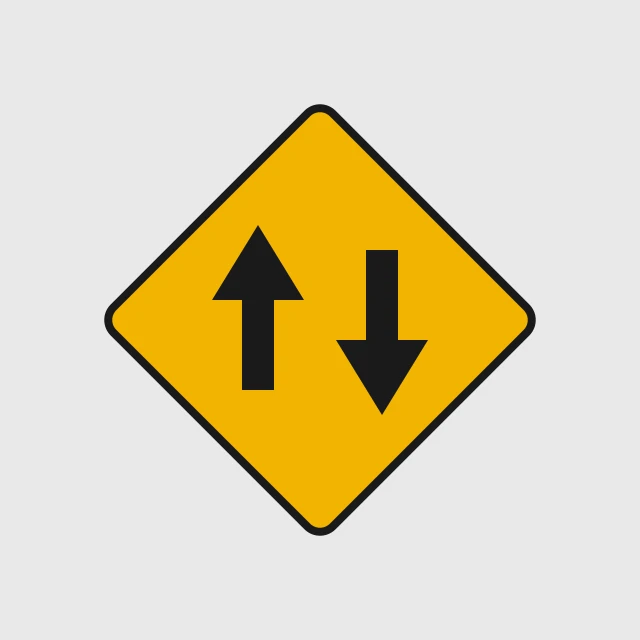
Correct answer: Two-way traffic ahead.
Explanation: Two arrows pointing opposite directions warn that you're entering a two-way traffic section, often after a one-way or divided road.